Tracing the Aroma: MY JOURNEY THROUGH INDIA’s BIRIYANI TRAIL
Insight No. 29
Author: Mani Skaria, Ph.D. (the Silly Goose Grandpa)
Professor Emeritus, Texas A&M–Kingsville
During my recent travels in Madhya Pradesh, Delhi, Chhattisgarh, Kerala, Karnataka, and Rajasthan, one sight kept repeating itself — a biryani shop on nearly every corner. From roadside stalls to fine restaurants, the word biryani glowed everywhere like a shared cultural signature.
For many years, I was indifferent to biryani. My liking for it was mixed at best. Yet, I recall a few special occasions when a plate of biryani impressed me deeply with its flavor and aroma — though I can no longer remember when or where.
As I traveled and began studying the dish, I realized that what makes biryani exceptional lies in its place, process, and ingredients. Each region’s version reflects its soil, culture, and climate — from the rice variety and oils to the layering method and the patience of the cook.
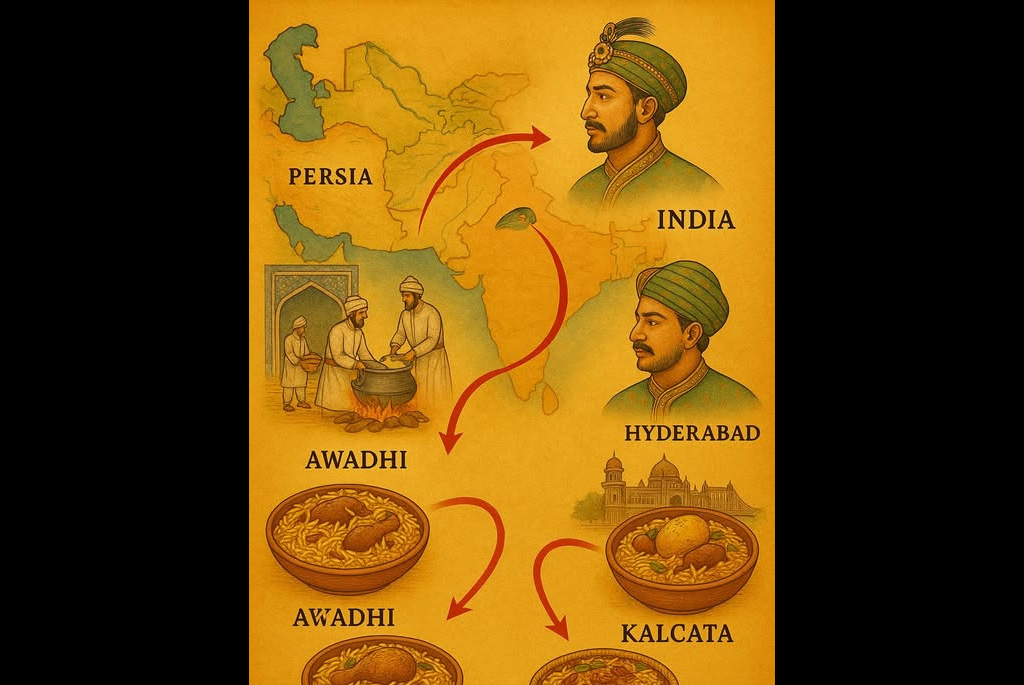
Tracing its roots led me westward to Persia (IRAN), the land where cooking aromatic rice and meat became art. Persia has given the world many treasures — from poetry and architecture to agriculture. Even in my professional life, the name Persian lime (Citrus latifolia) carries a special meaning: I had the privilege of reintroducing Persian Lime as a commercial crop in the United States after a 15-year gap, following the decline of lime groves in Miami-Dade County, Florida. Like biryani, that lime traveled – originally from India but adapted in Persia and found new life in another land. Both stories — one of food and the other of fruit — show how ideas migrate and flourish in new environments.
 What Is Biryani?
At its essence, biryani is a layered rice dish in which fragrant rice and spiced meat are cooked separately and then united through slow steaming. The word comes from Persian — birinj (rice) and biryan (to fry or roast).
When this culinary tradition reached India through the Mughal courts, it absorbed local ingredients and imagination. Over time, each region reinvented it — using different rice varieties, spices, and cooking methods — until the dish became more Indian than Persian.
 What Is Dum Biryani?
The dum technique, perfected in Hyderabad, India means cooking under sealed steam. Partially cooked rice and raw marinated meat are layered in a heavy pot, sealed with dough, and cooked slowly. The trapped steam infuses each grain with flavor and fragrance — a perfect harmony of patience and precision.
 Regional Biryani Traditions
Across India, every region gives biryani its own soul. In Bhopal, the Mughal-Afghan legacy lives on in smoky, pakki-style layers of basmati and kewra-scented meat. Delhi blends royal refinement with street energy, adding potatoes or eggs for depth. In Chhattisgarh, short-grain rice and mild rustic spices create simple home comfort. Kerala’s Malabar coast offers a ghee-rich, gently sweet biryani of jeerakasala rice, while Karnataka’s Donne Biryani adds a coastal touch of coconut milk and green masala, served in leaf cups. Finally, Rajasthan crowns the trail with its royal saffron-and-ghee biryani, fragrant and golden. From smoky north to sweet south, each bowl tells the story of India’s geography, history, and heart — all expressed in rice and spice.