Do You Know What Really Kills Your Plants in a Freeze?
By Mani Skaria, PhD
Texas froze again.
So did large parts of America.
Whenever this happens, the same questions return:
Why did some plants survive while others died?
Why did protection work in one place and fail in another?
Is it the cold itself that kills plants?
The real answer lies inside a single plant cell.
Cold does not kill plants — ice does
Plants do not die simply because temperatures drop.
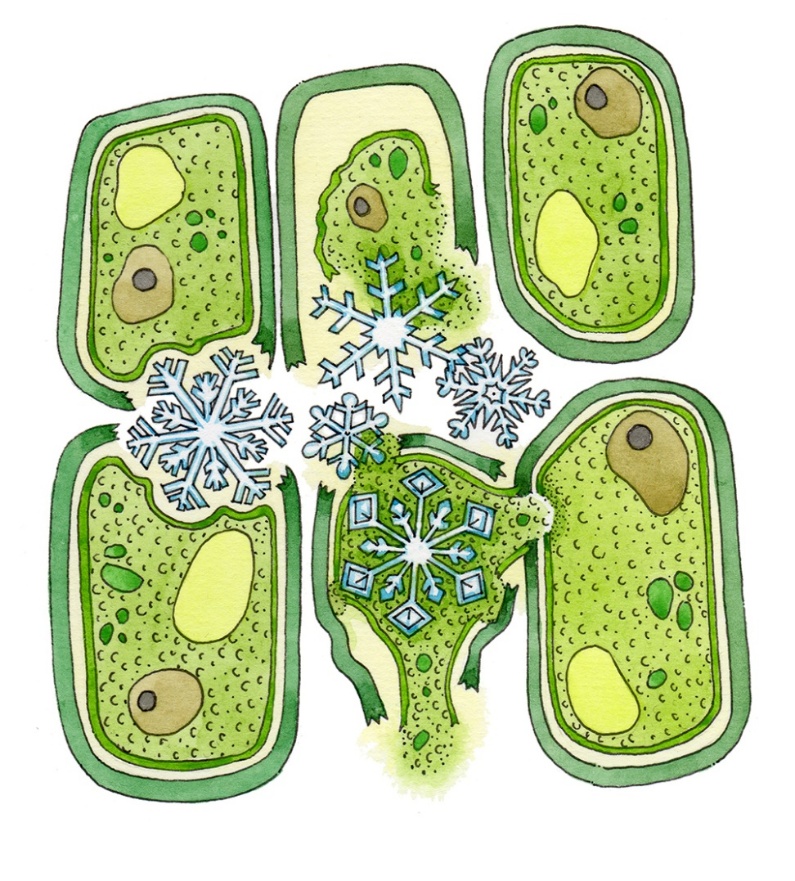
They die when ice forms inside their cells.
Every plant cell contains water. That water is surrounded by a thin, living boundary called the cell membrane. This membrane is flexible, selective, and essential for life.
As temperatures fall from the 70s into the 30s, the membrane becomes more fragile. The cell slows down, but it is still alive. Damage has not yet occurred.
The danger begins when water freezes.
Ice nucleation — the moment damage begins
 Water does not freeze all at once.
First, one tiny ice crystal forms.
That first crystal is called ice nucleation.
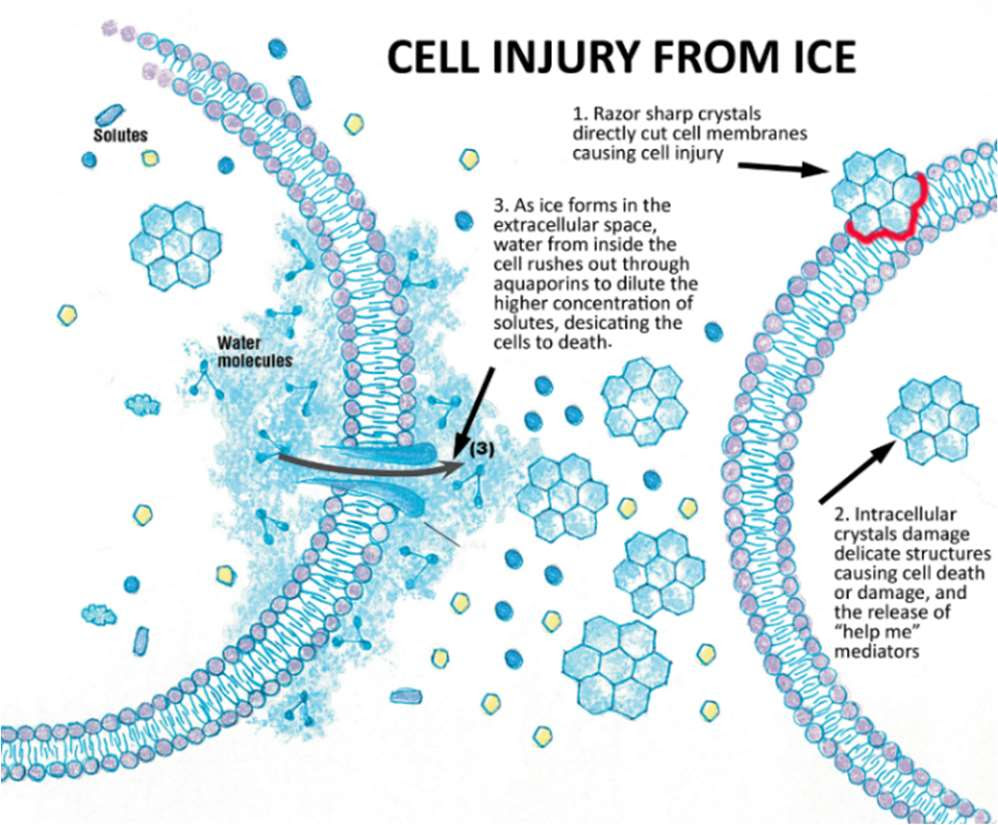
Once nucleation starts, ice crystals grow rapidly. If this happens inside the plant cell, the expanding ice physically punctures the membrane. The damage is mechanical and irreversible.
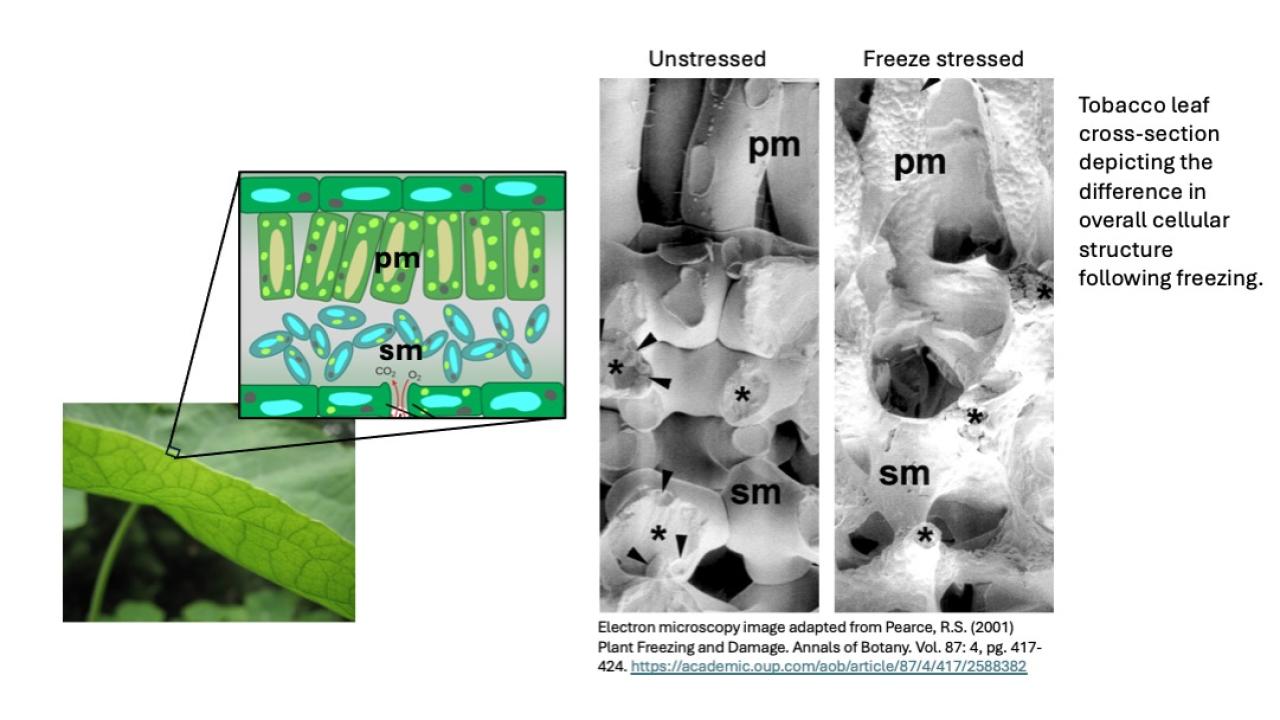
The cell may look intact after thawing, but its internal organization is destroyed. Membranes cannot reseal. Metabolism cannot restart. The cell is biologically dead.
This is why freeze damage often appears hours or days after sunrise, not immediately.
Outside ice vs inside ice — a critical difference
Not all ice is deadly.
- Ice outside the cell
- Pulls water out of the cell
- Causes dehydration but not rupture
- Cells can survive and recover
- Ice inside the cell
- Expands
- Tears membranes
- Guarantees cell death
This single distinction explains why some freeze protection methods work—and why others fail.
Why sprinklers can protect plants during a freeze
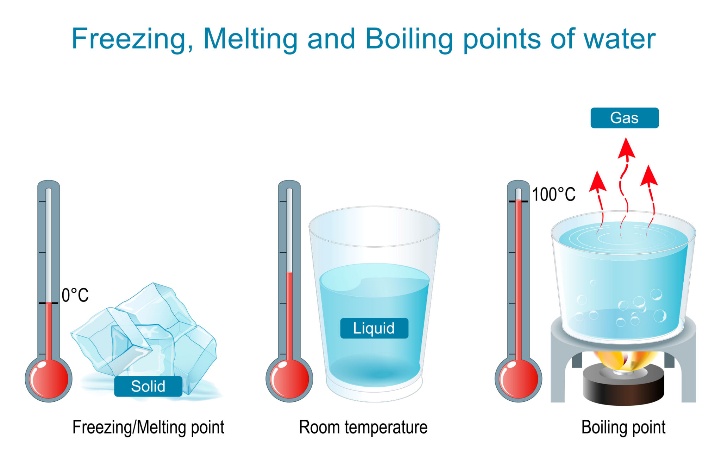
It seems counterintuitive, but spraying water during a freeze can protect plants.
When liquid water freezes, it releases heat. This heat keeps plant tissues near 32°F, preventing ice from forming inside the cell. Ice forms safely on the outside, while the inside remains unfrozen.
If water application is continuous and conditions are right, sprinklers effectively control where ice forms, protecting the cell membrane.
Stopping water too early, however, can cause rapid freezing and severe damage.
Why plastic covers and blankets help
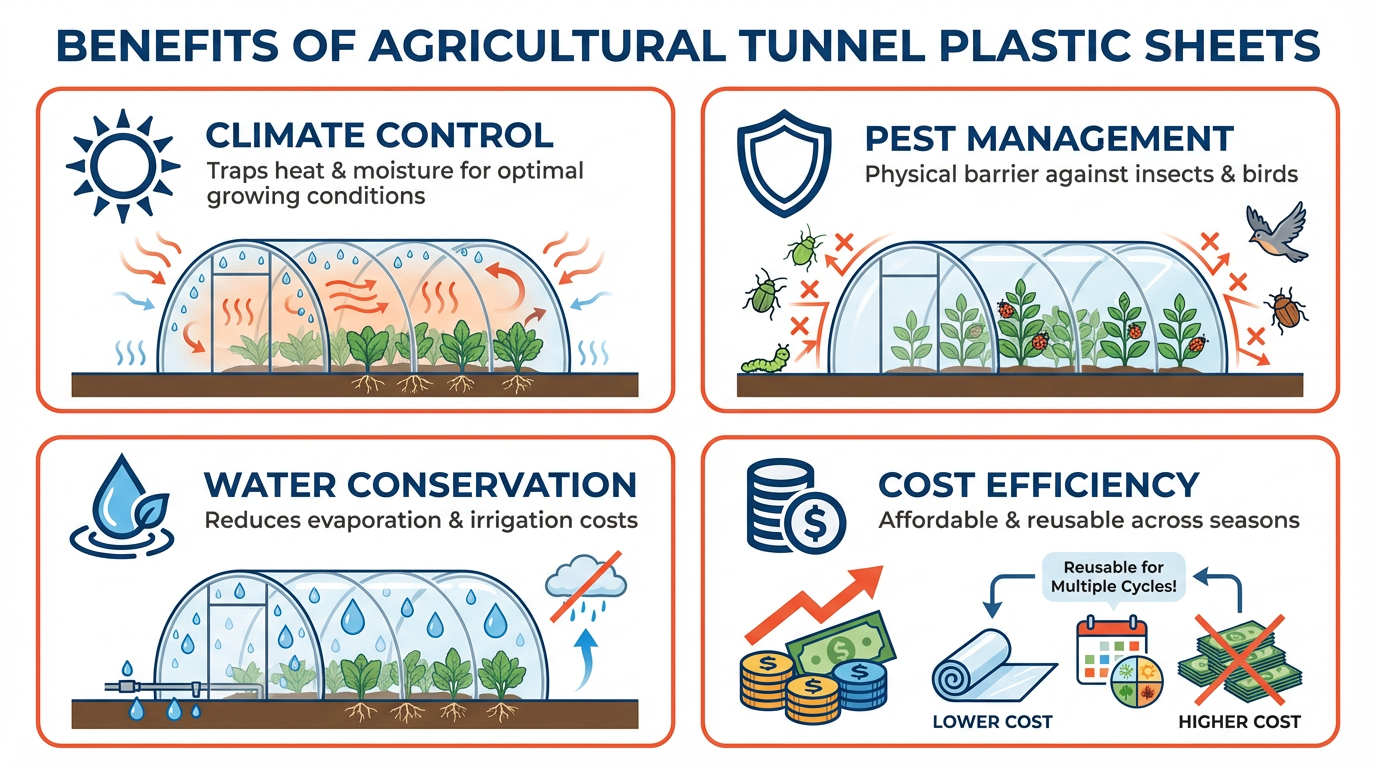
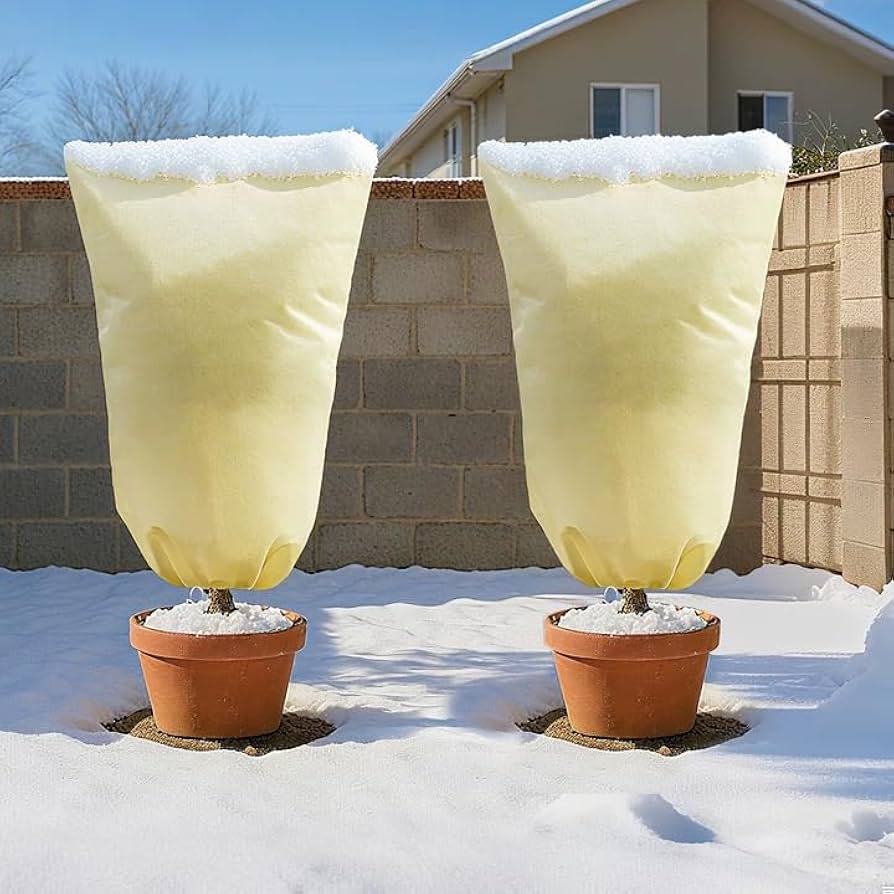
Plastic covers, row tunnels, and blankets work differently.
They do not add heat.
They slow heat loss.
By trapping warmth from the soil and blocking wind, they slow the rate of cooling. This delay can prevent ice nucleation from ever starting inside the cell.
If ice never forms, the membrane remains intact—and the plant survives.
Can vegetation help?
Low vegetation, mulch, or ground cover can offer limited protection.
They reduce wind, trap a small amount of heat, and slow sudden temperature drops. While not as effective as plastic or water, this biological buffering can sometimes be enough to help young or stressed plants survive light freezes.
Vegetation does not heat the plant—it buys time.
The simple truth about freeze protection
All freeze protection methods—sprinklers, plastic covers, blankets, mulch—aim to do one thing:
Prevent ice from forming inside the plant cell.
If that goal is met, the plant survives.
If it fails, damage is unavoidable.
Freeze protection is not guesswork.
It is cell biology applied in the field.
Final thought
When Texas freezes again, the outcome is decided long before we see wilted leaves or blackened tissue.
It is decided in the instant when water inside a cell either stays liquid…
or becomes ice.
Understanding that moment changes how we protect plants—and why protection sometimes works, and sometimes doesn’t.
-END-