The Day My Dishwasher Smelled Like Eggs
What it taught me about cleaning, disinfection, and a chemical we often misunderstand
An unexpected moment at home
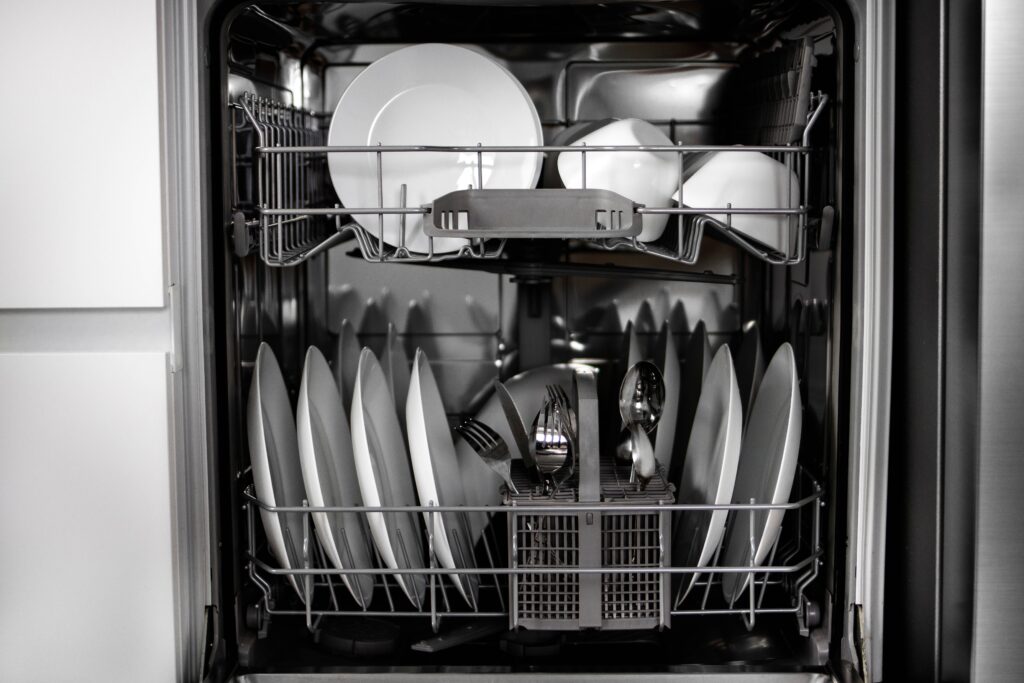
This morning, when we opened our dishwasher, there was an unmistakable smell.
Not subtle. Not mild.
It was the smell of eggs.
What made this surprising was not just the odor—but the context. Our dishwasher is new, only a couple of months old. And in our home, we follow a careful routine. Utensils that come into contact with eggs are kept separate and pre-soaked in a dilute bleach solution before entering the dishwasher.
With that level of precaution, I did not expect what we encountered.
And yet, there it was.
This raised a simple but important question:
How does this happen… even when we think we are being careful?
Understanding what we mean by “Clorox”
In everyday language, “Clorox” is often used interchangeably with household bleach. Scientifically, however, what matters is the active ingredient: sodium hypochlorite.
In typical household formulations, sodium hypochlorite is present at approximately 5–8%, with the remainder consisting primarily of water and stabilizing components.
When dissolved in water, sodium hypochlorite forms hypochlorous acid—the actual disinfecting agent. This compound is highly effective because it:
- Disrupts proteins
- Damages cell membranes
- Inactivates viruses
This is why product labels can make strong claims regarding bacteria, viruses, and odor control.
However, those claims depend on a critical variable:
How the product is used
It is also important to note that, like many effective chemical agents, sodium hypochlorite must be handled with care. At higher concentrations or with prolonged exposure, it can be corrosive to metals, fabrics, and even skin.
A lesson from the laboratory
During my graduate years working with viruses, bleach was never used casually. It was measured, diluted appropriately, and—most importantly—prepared fresh.
That discipline stayed with me long after leaving the laboratory.
The gap between habit and chemistry
This is where many households unknowingly diverge from effective practice.
Diluted bleach is often stored in spray bottles and used over extended periods—weeks or even months. While the routine remains consistent, the chemistry does not.
Over time, sodium hypochlorite degrades, particularly when exposed to light, air, and heat. As a result, what was once an effective disinfectant gradually loses its activity.
The process still looks the same: spray, wipe, clean.
But the underlying chemistry may no longer be performing its intended function.
Returning to the original problem
In response to the situation, my wife and I took a practical step. We removed all items from the dishwasher—plates, utensils, racks—and re-soaked them in a fresh bleach solution. The dishwasher was then run again on a high-temperature cycle.
And now, we wait.
A brief acknowledgment
With quiet thanks to Berthollet (France, 18th century), who created it, and Labarraque (France, 19th century), who brought it into public health.
A broader reflection
Disinfection is not a single action. It is a process.
In controlled environments such as laboratories, we respect the variables: concentration, freshness, and contact time. In everyday settings, we often rely on routine.
Moments like this serve as a reminder:
It is not the act of cleaning that matters most— it is whether the chemistry is still doing its work.
Closing thought
The boundary between “clean” and “disinfected” is not always visible.
But it is always consequential