Australian Finger Lime: From the Land Down Under to Texas
Insight No. 8
“In every walk with nature, one receives far more than he seeks.” -John Muir

Author: Mani Skaria, Ph.D.
Professor Emeritus, Texas A&M–Kingsville
President & CEO, US Citrus
A Scientific Journey with Citrus Diversity
In March 2025, I traveled to Mildura, in Victoria, Australia, to attend the International Organization of Citrus Virologists meeting. It was a gathering of seventy scientists from fourteen countries, all devoted to the health and future of citrus. I was honored to present on a subject close to my heart: citrus production for profitability under natural disasters and problems.
Beyond the lecture halls, I walked through Australia’s orchards and nurseries. There, I saw again a fruit that has fascinated me for years — the Australian finger lime. Native to the rainforests, treasured by Indigenous Australians, and now celebrated worldwide by chefs, this small fruit carries a very big story.
“In every walk with nature one receives far more than he seeks.”
— John Muir
What Makes Finger Lime Special?
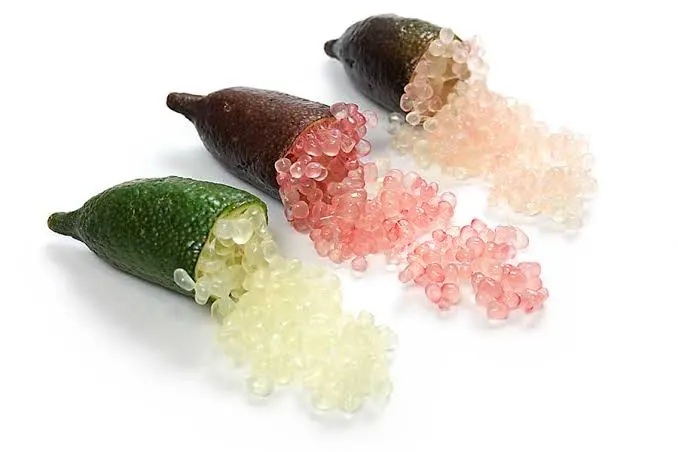
The scientific name is Citrus australasica. Unlike round oranges or grapefruits, finger limes are long and slender, resembling a finger. When cut open, they reveal something magical: tiny pearls of juice that look like caviar. These pearls roll out in colors ranging from green to ruby red, bursting with citrus tang. It is no surprise chefs call it “citrus caviar.”
From seafood dishes to cocktails, finger limes add beauty, flavor, and texture. But their value is more than culinary. They represent resilience, diversity, and the ever-expanding story of citrus.
Finger Limes in Texas
A decade ago, at US Citrus, we introduced finger lime plants into the Texas landscape. These were sourced from the University of California, Riverside’s Citrus Clonal Protection Program — one of the finest clean plant programs in the world. This ensured that what we brought into Texas was safe, healthy, and ready to grow.
At first, finger limes were a curiosity. Today, they are part of our expanding nursery work. With micro-budding — a technique that shortens the time from planting to fruiting — and soil-health solutions like Dr. Mani’s Magic Plant Booster and Dr. Mani’s Magic Super Soil, we are making finger limes thrive in Texas soils.
During my recent Australia visit, I toured a nursery producing finger limes in many colors. The nursery owner and I connected deeply. To my surprise, he was already using a precursor of my microbiota technology — the very system I once shared in California. It was a striking reminder of how ideas travel across borders and return to inspire new possibilities.
Opportunities and Challenges in Global Trade
Finger limes are gaining demand worldwide. In California, they can retail for $30–$50 per pound in specialty markets. Chefs and mixologists prize their unique flavor. The broader U.S. lime market is also expanding — projected to grow from $2.5 billion in 2025 to over $3 billion by 2030.
But global trade has challenges. As of April 2025, the United States placed a 10% baseline tariff on most Australian exports, including citrus. By July, the tariff directive was confirmed: 10% for Australia, compared to higher rates for some countries but still enough to add pressure. In August, the U.S. removed the de minimis exemption, meaning even small shipments of frozen citrus caviar now face tariffs and fees.
I have been in contact with Australia’s top finger lime producers to explore importing frozen citrus caviar to Texas. The excitement is real, but so is the caution. Tariffs, consumer uncertainty, and rising costs require us to move slowly and carefully.
For now, the strongest opportunity lies in local production — finger limes grown, harvested, and enjoyed in Texas.
Why Finger Lime Matters
To me, finger limes symbolize discovery. They are global in story yet personal in meaning. They connect the rainforests of Australia, the laboratories of UC Riverside, and the nurseries of Texas. They showcase how science, entrepreneurship, and culture meet in one small fruit.
As we look ahead, I see finger limes not just as a novelty but as a valuable addition to the citrus family. With innovation in planting, soil health, and careful trade navigation, we can make finger limes a lasting part of both orchards and kitchens.
“The Australian Finger Lime is not just an exotic fruit; it a symbol of how biodiversity and innovation can come together to create new opportunities for growers and delight for consumers worldwide..”
— Dr. Mani Skaria
Final Reflection
When I stood in Mildura this spring, surrounded by scientists from around the world, I felt once again the power of citrus to bring people together. Finger limes were part of that story. And today, as we nurture them in Texas, they continue to remind me of what citrus truly represents: resilience, diversity, and hope.
From Australia’s rainforests to Texas landscapes, the journey of the finger lime is far from over.
— Dr. Mani Skaria
Founder, US Citrus LLC
Professor Emeritus, Texas A&M–Kingsville
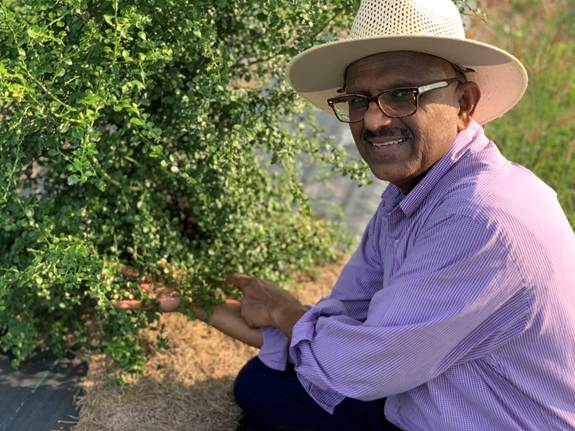
“The finger lime may be tiny in size, but it carries a giant message: The future of citrus lies in diversity, resilience, and creativity..”
— Dr. Mani Skaria