Mistakes and Failures: Understanding the Difference, Embracing the Lessons
Insight #5

Author: Mani Skaria, Ph.D.
Professor Emeritus, Texas A&M–Kingsville
President & CEO, US Citrus
Production Date: August 31, 2025
Narrative
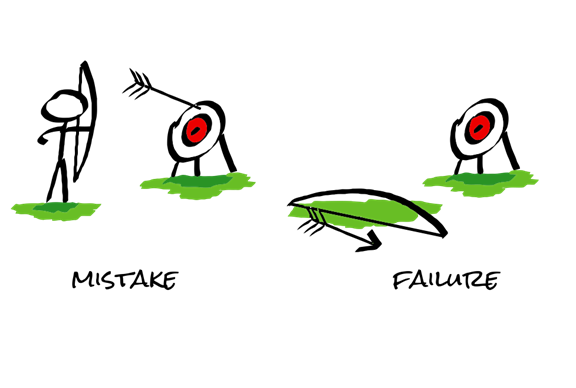
Human progress is inextricably linked to mistakes and failures. From early childhood to the frontiers of science, no individual or society has advanced without stumbling along the way. Mistakes and failures are often grouped together as if they are the same, yet they carry different meanings, consequences, and lessons. Understanding their distinction allows us to approach challenges with clarity, learn with humility, and act with resilience.
This insight examines the distinctions between mistakes and failures, their psychological effects, cultural interpretations, historical examples, and strategies for transforming both into stepping stones toward growth. The central theme is not to avoid mistakes and failures but to engage with them wisely.
The Insight (Key Takeaways)
• Mistakes are momentary errors, often correctable; failures are long-term setbacks with broader consequences.
• Understanding the distinction reshapes responses—mistakes call for correction, failures demand strategic reassessment.
• Human psychology attaches embarrassment to mistakes, despair to failures—growth comes from reframing both.
• Cultural perspectives shape how mistakes and failures are judged—what is shameful in one society may be honorable in another.
• History shows mistakes and failures can fuel discovery, innovation, and resilience.
• Repeated mistakes indicate negligence, while constructive failure strengthens character.
Applications
For Individuals: Acknowledge mistakes promptly, analyze failures objectively, and document lessons for future growth.
For Professionals: Treat repeated mistakes as red flags but embrace failures as opportunities for reinvention.
For Organizations: Foster a culture that allows for safe-to-fail experimentation, distinguish between small errors and systemic breakdowns, and establish clear accountability.
For Educators: Use mistakes as diagnostic tools and failures as opportunities for resilience training, fostering lifelong learning.
Quotes
Dr. Mani’s Quote
“A mistake is a lesson waiting to be noticed; a failure is a lesson waiting to be lived. Both, when embraced with humility, become the foundation of true growth.” — Dr. Mani Skaria
Famous Quotes
“The only man who never makes a mistake is the man who never does anything.” – Theodore Roosevelt
“Failure is simply the opportunity to begin again, this time more intelligently.” – Henry Ford
“Mistakes are the portals of discovery.” – James Joyce
“Success is not final, failure is not fatal: it is the courage to continue that counts.” – Winston Churchill
Reflection Questions
• How do you personally distinguish between a mistake and a failure in your life?
• Which has taught you more: a mistake corrected or a failure endured?
• How does your cultural background shape your perception of mistakes and failures?
• In your current work or study, where can you turn setbacks into lessons rather than regrets?
Closing Note
Mistakes are smaller, immediate errors that refine attention to detail. Failures are larger setbacks, testing vision and persistence. The difference lies in response: a mistake ignored grows into failure, while a failure reflected upon transforms into wisdom. By embracing both with humility and clarity, we turn setbacks into stepping stones of growth.
Tagline
“Every stumble, whether a mistake or a failure, is a lesson in disguise—walk through it with humility.” — Mani Skaria