Sleep Journeys: From Babies to Scientists, Spotty to Peanut to Myself
Insight No. 11
“A good laugh and a long sleep are the best cures in the doctor’s book.”
– Irish Proverb (widely cited in sleep and wellness literature)
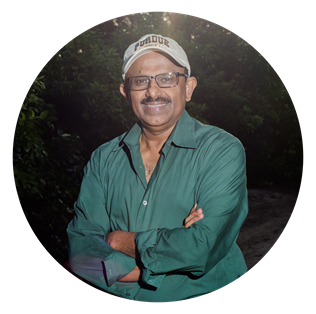
Author: Mani Skaria, Ph.D.
Professor Emeritus, Texas A&M–Kingsville
President & CEO, US Citrus
Production Date: September 9, 2025
Introduction
Sleep is universal, yet endlessly varied. From infants who drift into slumber within seconds to world leaders who power through on only a few hours, the way we sleep reflects biology, personality, and circumstance. My own reflections on sleep are woven from observation, science, history, and personal experience—including two tiny grandchildren, Grandbaby 1 (B1) and Grandbaby 2 (B2), who already remind me that the story of sleep is also a story of life itself.
The Babies: Grandbaby 1 (B1) and Grandbaby 2 (B2)
B1, now two and a half, sleeps with a rhythm that seems both magical and unpredictable. Some nights, she resists bedtime with a fierce will, but when she finally surrenders, her dreams are deep, accompanied by gentle breathing, occasional twitches, and soft murmurs.
B2, only one month old, represents an even earlier stage of human sleep. Her tiny body moves in jerks as her nervous system develops, and her sleep is punctuated by frequent waking to feed. Science tells us that newborns spend about 50% of their sleep in REM (rapid eye movement), compared to only 20–25% in adults. Watching her reminds me that sleep is not static; it evolves as we grow.
Through them, I glimpse the raw, unfiltered beginnings of human sleep patterns.
The Family Pets: Spotty the Dog and Peanut the Cat
Sleep in our household isn’t limited to humans. Spotty, our loyal dog, snores in short bursts that echo through the living room. Peanut, our mischievous cat, adds his own rhythmic snorts. Interestingly, their snores differ—Spotty’s heavy and guttural, Peanut’s higher-pitched and irregular.
Science confirms that animals share many aspects of human sleep. Dogs experience REM sleep, complete with twitching paws that suggest dream chases. Cats, on the other hand, are masters of polyphasic sleep, drifting in and out of naps for a total of 12–16 hours daily. Their snoring and restless movements remind us that sleep is a universal biological necessity, but with species-specific variations.
My Own Sleep Journey
I have experienced sleep as a student, a scientist, and now as a grandfather. In youth, I could survive on four or five hours a night while working late into the lab. Later, I sought the recommended seven to eight hours to preserve health and productivity. Today, I find that my body’s rhythm often falls somewhere in between, shaped by responsibilities, stress, and reflection.
Snoring sometimes punctuates my nights. Movement, too—tossing and turning, adjusting to find comfort. These are reminders that sleep is never perfectly still. It is alive, dynamic, and connected to our emotions and health.
The Scientists: Franklin, Tesla, Darwin
History is full of remarkable scientists whose sleep shaped their work.
– Benjamin Franklin famously advised “early to bed and early to rise,” yet he often stayed up late reading and writing by candlelight. His sleep was less about strict hours and more about disciplined intent.
– Nikola Tesla claimed to sleep only two hours a night, believing his genius required wakefulness. Yet, he also suffered from nervous breakdowns, possibly linked to his extreme sleep deprivation.
– Charles Darwin, by contrast, favored regular rest, working in short focused bursts with long breaks, and walking daily. His balanced sleep habits perhaps nurtured the patience needed to write On the Origin of Species.
These examples remind us that sleep habits can differ dramatically, even among great minds. What matters is not a single formula, but alignment between one’s body, mind, and purpose.
World Leaders and Sleep: A Study in Contrasts
Leadership requires stamina, but approaches to sleep vary:
– Donald Trump often boasted that he sleeps only four to five hours a night, rising early to begin his workday. His philosophy aligns with the idea that less sleep equals more productivity.
– Barack Obama, by contrast, was known to stay up late reading and working, yet tried to preserve six hours of rest.
– Winston Churchill kept a famous habit: he slept late, worked intensely, then took a daily afternoon nap that he credited for much of his wartime resilience.
– Margaret Thatcher reportedly survived on only four hours, a habit shared by many leaders who claim that short sleep fuels discipline and decisiveness.
These patterns show us that leadership does not demand identical sleep schedules. Instead, it reveals how individuals bend rest to meet the demands of history.
Movement and Snoring: Common Threads
Across all ages and species, sleep is rarely silent. Snoring arises when airflow is obstructed, causing tissues in the throat to vibrate. Movement reflects adjustments in posture or bursts of dream-related activity. Babies wiggle, pets twitch, and adults roll over. These micro-events are not flaws but reminders that sleep is a living process.
The Science of Sleep Cycles
Human sleep follows cycles of about 90 minutes, alternating between non-REM and REM stages. Light sleep transitions into deep, restorative stages before REM brings dreams. Babies cycle more quickly, while older adults often experience lighter, fragmented sleep.
This explains why B1 can fall asleep anywhere, why B2 wakes so often, and why adults like myself sometimes wake in the middle of the night yet still feel restored.
Reflections: Sleep as a Mirror of Life
From B1 and B2’s fragile rest to Spotty’s snores, Peanut’s naps, and my own restless tossing, I see that sleep mirrors life. Babies teach us that growth requires abundant rest. Pets remind us that dreams belong to all creatures. Scientists and leaders show us that sleep habits shape history.
Ultimately, sleep is personal. It cannot be measured only in hours but in how it sustains our bodies, minds, and spirits. In my own journey, sleep has been a companion to science, to work, to family, and now to reflection.
Conclusion
“Sleep Journeys: From Babies to Scientists, Spotty to Peanut to Myself” is more than a title—it is the story of how sleep connects generations, species, and even the mighty and the humble. Whether in the cradle, the kennel, the laboratory, or the Oval Office, sleep remains one of the great equalizers of life.
Dr. Mani Skaria Quote
“Sleep is not just a pause in life; it is life itself renewing us. From my grandchildren’s gentle dreams to my own restless nights, I see that sleep carries both science and soul.”
– Dr. Mani Skaria